

How Photography Addresses Social Issues and Documents Glaciers in Retreat
Introduction
Photography has long served as a documentary tool for recording events, environments, and social conditions. In recent decades, it has increasingly been applied to the examination of social and environmental challenges, including climate change. One significant area within this practice is photography addressing social issues, which uses visual evidence to contextualize complex problems for public understanding. Within this field, Glaciers in Retreat photography has emerged as a focused method for documenting the visible impacts of rising global temperatures on fragile ecosystems.
This article examines how photography addressing social issues intersects with Glaciers in Retreat photography, outlining its purpose, methodology, and scope. It provides an objective analysis of how glacier-focused photographic projects contribute to climate discourse through documentation, scale, and long-term visual records.
Photography Addressing Social Issues
Photography addressing social issues refers to visual work created to document, analyze, or present societal challenges. These challenges may include public health, inequality, environmental degradation, or cultural change. The defining characteristic of this genre is its emphasis on factual representation supported by ethical practices and contextual accuracy.
Rather than relying solely on aesthetic value, this type of photography often integrates research, fieldwork, and long-term observation. Images are typically accompanied by written context, timelines, or comparative visuals that allow viewers to interpret change over time. The photographer's role is not to persuade but to record and clarify complex realities.
Glaciers in Retreat Photography
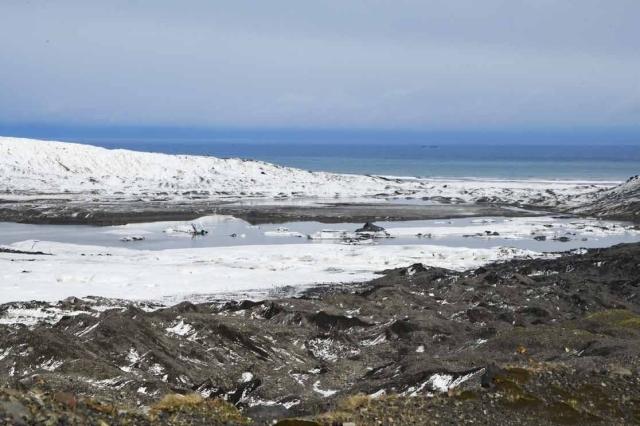
Glaciers in Retreat photography focuses specifically on the visual documentation of shrinking glaciers and changing polar or alpine environments. These photographic projects often involve repeated site visits over extended periods. The objective is to record measurable environmental change through consistent framing, scale references, and geographic precision.
This subset of photography addressing social issues operates at the intersection of environmental science and visual documentation. It translates scientific data, such as ice loss, melt patterns, and landscape transformation, into accessible visual records.
The Relationship Between Social Issue Photography and Glacier Documentation
Climate Change as a Social Issue
Climate change is not solely a scientific concern. It has direct social consequences affecting water resources, coastal communities, agriculture, and infrastructure. As glaciers retreat, downstream ecosystems and human populations experience altered water availability and increased risk of flooding or drought.
Photography addressing social issues provides a framework for situating glacier retreat within these broader social contexts. Images of changing ice formations are not presented in isolation but as part of a connected environmental system with human implications.
Visual Evidence and Temporal Comparison
One defining feature of Glaciers in Retreat photography is its reliance on temporal comparison. Photographers often use archival images, GPS data, and precise vantage points to recreate earlier photographs under similar conditions. This method allows for direct visual comparison that illustrates environmental change without interpretive language.
Such an approach aligns with the principles of photography addressing social issues, which prioritizes verifiable evidence over subjective interpretation. The photographs function as records that can be examined alongside scientific studies and historical documentation.
Methodologies Used in Glacial Photography Projects
Site Selection and Access
Photographers working in glacial environments typically select sites based on scientific relevance, accessibility, and documented historical data. Many locations are chosen because they have existing research records or are part of long-term climate monitoring efforts.
Access often requires coordination with environmental researchers, park authorities, or indigenous communities. Safety protocols and environmental regulations shape how and when photography can occur.
Technical Considerations
Glacier photography demands specialized technical planning. Lighting conditions, weather variability, and seasonal changes affect image consistency. Photographers frequently use large-format or high-resolution digital equipment to capture fine surface details and geological textures.
Consistent focal lengths, camera height, and orientation are used to maintain comparability across time. These technical constraints support the factual integrity of the work and reinforce its role within photography, addressing social issues.
Long Term Documentation
Many Glaciers in Retreat photography projects extend over multiple years or decades. This long-term scope allows for the accumulation of visual data that shows gradual change rather than isolated events.
Longitudinal documentation distinguishes this work from travel or landscape photography. The emphasis is on process and progression rather than singular visual impact.
Types of Glaciers in Retreat Photography
Landscape-Based Documentation
This approach focuses on wide field views of glaciers within their surrounding terrain. These images show how ice interacts with rock formations, vegetation zones, and water systems. Landscape-based documentation provides context for understanding scale and environmental interdependence.
Detail-Oriented Geological Imaging
Some photographers concentrate on surface patterns, melt channels, and ice textures. These close-range images highlight physical processes such as fracturing and sediment movement. When paired with wider views, they contribute to a comprehensive visual record.
Exhibition Scale Installations
Large-format prints and installations are often used in museums or public spaces. The scale of these displays allows viewers to engage with the imagery in a spatial manner, approximating physical presence within the environment. This presentation method is common in award-winning photography addressing social issues.
Unique Characteristics of This Photographic Approach
Integration of Art and Environmental Documentation
One defining feature of this work is the integration of artistic composition with scientific accuracy. Award-winning practitioners in this field balance formal visual structure with strict adherence to documented reality. This combination allows the images to function as both records and analytical tools.
Immersive Visual Methodology
Glaciers in Retreat photography frequently employs large-scale imagery designed for extended viewing. High-resolution detail and controlled perspective allow viewers to observe geological features that are often inaccessible. This immersive quality facilitates a more in-depth examination of environmental conditions without requiring interpretive guidance.
Focus on Environmental Urgency Through Evidence
Rather than relying on narrative persuasion, this photographic approach conveys urgency through the accumulation of visual data. Sequential imagery, repeated locations, and measurable change establish context. The emphasis remains on documentation, aligning with the standards of photography addressing social issues.
Analysis and Comparative Perspective
Compared to other forms of environmental communication, such as written reports or data visualizations, Glaciers in Retreat photography offers a direct sensory reference. However, it does not replace scientific research. Instead, it complements it by providing visual confirmation of documented trends.
Within the broader field of photography addressing social issues, glacier-focused projects are distinguished by their reliance on long-term environmental monitoring and geographic specificity. While social documentary photography may focus on immediate human conditions, glacier photography emphasizes slow change with long-term consequences.
This distinction shapes audience engagement. Viewers are presented with evidence rather than argument. Interpretation is guided by context rather than instruction.
Conclusion
Photography addressing social issues plays a critical role in documenting complex global challenges. Within this field, Glaciers in Retreat photography provides a structured visual record of environmental change driven by climate factors. Through consistent methodology, long-term documentation, and precise technical execution, these projects contribute to public understanding without relying on promotional framing.
By integrating environmental documentation with visual clarity, this photographic approach establishes a factual basis for examining glacier retreat as both an ecological and social issue. Its value lies in its capacity to translate scientific observation into accessible visual form while maintaining objectivity and methodological rigor.